
 EN ▼
EN ▼

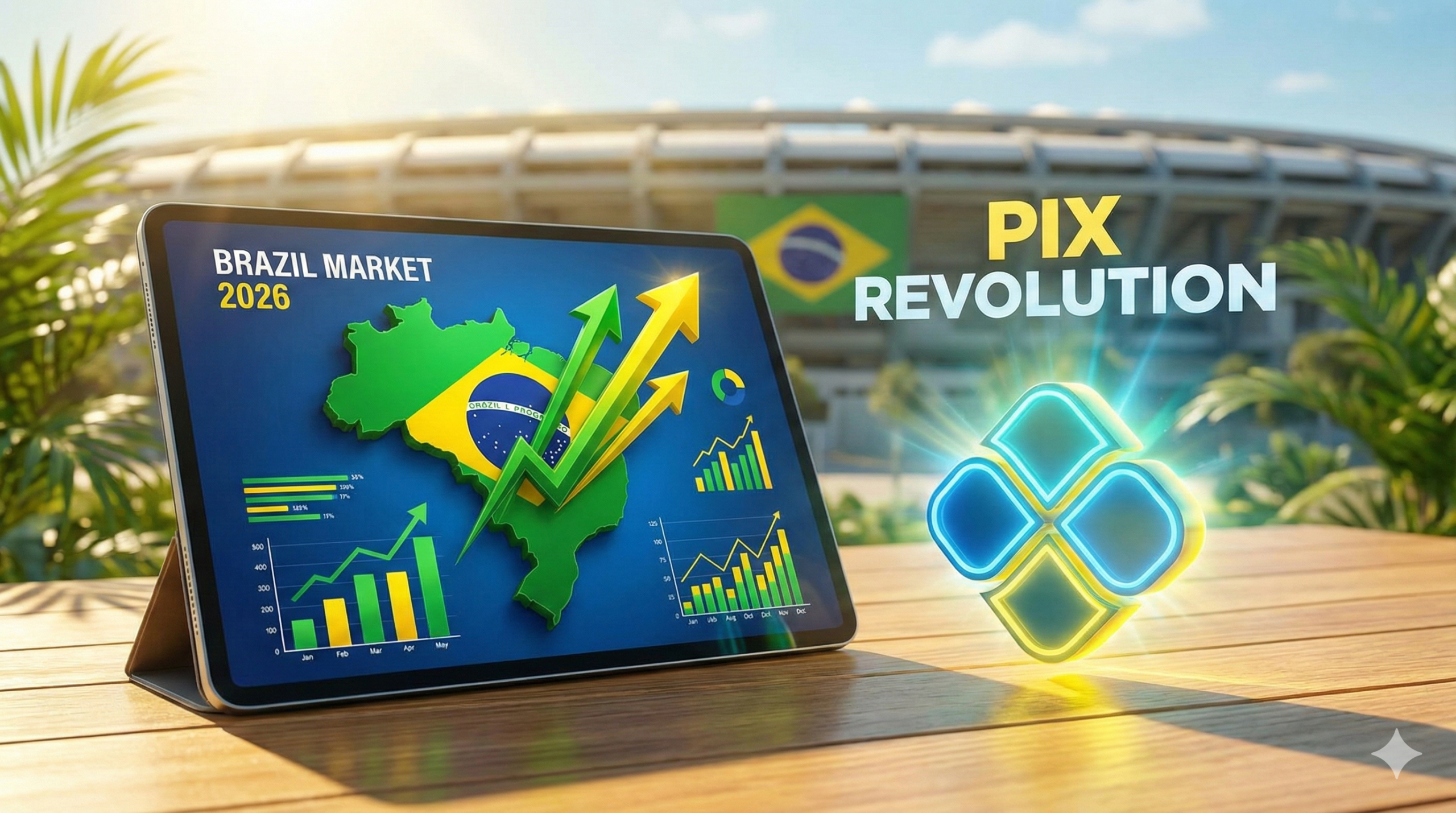
Brazil was long considered the “sleeping giant” of global gambling. With the adoption of Federal Law No. 14.790/23 and the completion of the transition period by early 2026, the country has officially secured its status as one of the top five largest legal markets on the planet. This report provides a deep dive into economic efficiency, regulatory barriers, and structural changes in Brazilian consumer behavior.
1. Timeline of Legalization: From “Gray Zone” to Strict Control
The path to legalization in Brazil was arduous, spanning over five years of active debate in the National Congress.
- December 2023: Signing of the framework law establishing rules for sports betting and online casinos.
- 2024–2025: Development of the regulatory framework by the Secretariat of Prizes and Bets (SPA) under the Ministry of Finance.
- January 2026: Official launch of the fully licensed market. By this time, over 150 operators applied for federal licenses, each costing 30 million reais (approximately $6 million).
Technical Nuance: Unlike many European countries, a Brazilian license is valid for 5 years and allows an operator to manage up to three brands under a single permit, creating unique ground for large multi-brand holdings.
2. Economic Indicators: The PIX System Effect
The key driver of market growth in 2026 was the national instant payment system, PIX. It did more than just simplify transactions; it radically transformed the iGaming economy in the region.
Payment Infrastructure Comparative Analysis (2024 vs 2026)
| Parameter | 2024 Status (Gray Market) | 2026 Status (Legal Market) |
| PIX Share in Transactions | 72% | 94% |
| Average Withdrawal Time | 2–12 hours | < 30 seconds (Instant) |
| Deposit Success Rate | 82% | 98.5% |
| AML Control (Money Laundering) | Fragmented | Comprehensive via Central Bank integration |
The use of PIX allowed the regulator to implement an automated tax control system. Every win exceeding the tax-free threshold can now be automatically recorded by tax authorities in real-time.
3. Tax Architecture and Revenue Distribution
The 2026 Brazilian tax model is one of the most transparent yet stringent. Operators pay 12% of GGR (Gross Gaming Revenue).
Where does the money go? (According to Law 14.790)
- Sports (36%): Directed to the Ministry of Sports and sports federations. This has made bookmakers the primary sponsors of Brazilian football (over 90% of Serie A clubs have contracts with betting companies).
- Tourism (28%): Used for infrastructure development and promoting Brazil as a tourist destination.
- Public Safety (14%): Allocated to crime prevention and law enforcement.
- Education and Social Welfare: The remaining shares are distributed between schools and consumer protection funds.
4. Integrity Analysis: Combatting Match-Fixing
A major victory in the first year of regulation was the sharp reduction in sports corruption risks. According to the IBIA (International Betting Integrity Association) report for Q1 2026:
- Suspicious betting alerts on state championship matches (Campeonatos Estaduais) dropped by 28%.
- All licensed operators are mandated to report suspicious activity to the SPA within 24 hours.
- Biometric identification has been implemented to prevent “multi-accounting” and identity theft by professional fraudsters.
5. Marketing Restrictions and the Role of CONAR
In 2026, the Brazilian Advertising Self-Regulation Council (CONAR) implemented Annex “X,” which strictly regulates gambling marketing.
Key Prohibitions in 2026:
- No Promise of Income: Ads cannot position betting as a way to earn money or an alternative to work.
- Influencer Restrictions: Using influencers whose audience is more than 20% under the age of 18 is punishable by fines up to 2 million reais.
- Risk Labeling: Every advertisement must include a disclaimer about addiction risks, occupying at least 10% of the frame.
6. Deep Dive: The Brazilian Player Profile 2026
Data analytics from Kantar highlights unique traits of the local consumer:
- Mobile Priority: 97% of bets are placed via smartphones. Desktop versions are virtually irrelevant for the Brazilian market.
- Love for “Crash Games”: In the online casino segment, games like Aviator and Fortune Tiger account for up to 60% of turnover, surpassing classic slots and roulette.
- Social Betting: Brazilians frequently bet while watching matches in groups (Watch & Bet), requiring operators to provide flawless Live platform performance.
7. Challenges and Barriers: High Barrier to Entry
Despite its success, the 2026 market faces significant challenges:
- Market Consolidation: High license costs ($6 million) and taxes have made the market accessible only to global holdings (Flutter, Entain, Betano) and powerful local media groups (e.g., Grupo Globo, which launched Cartola Express).
- Lottery Cannibalization: Traditional state lotteries are losing popularity as the youth shift toward more dynamic iGaming verticals.
8. E-E-A-T Compliance: Source Reliability
This analysis is based on open reports and official publications from the following entities:
- Ministério da Fazenda (Brazil): SPA (Secretariat of Prizes and Bets) regulations.
- IBIA: Integrity statistics for sports competitions in Latin America 2026.
- Central Bank of Brazil: PIX transaction reports in the “Entertainment & Gambling” category.
- CONAR: Code of marketing ethics (Brazilian Advertising Self-Regulation Code).
Final Summary
Brazil in 2026 is not just a consumer market; it is a testing ground for the most advanced responsible gaming technologies and instant payment systems. The first year has demonstrated that with the right balance between state and business interests, iGaming can become a powerful source of revenue for the social sector without compromising the country’s sporting ecosystem.
-
Post Title Goes here with awesome text with a sustainable materials Sint nisi culpa tempor elit laborum laboris enim laborum est deserunt qui ipsum elit id adminMarch 7, 2026 -
Post Title Goes here with awesome text with a sustainable materials Sint nisi culpa tempor elit laborum laboris enim laborum est deserunt qui ipsum elit id adminMarch 7, 2026